How to read chocolate allergen labels
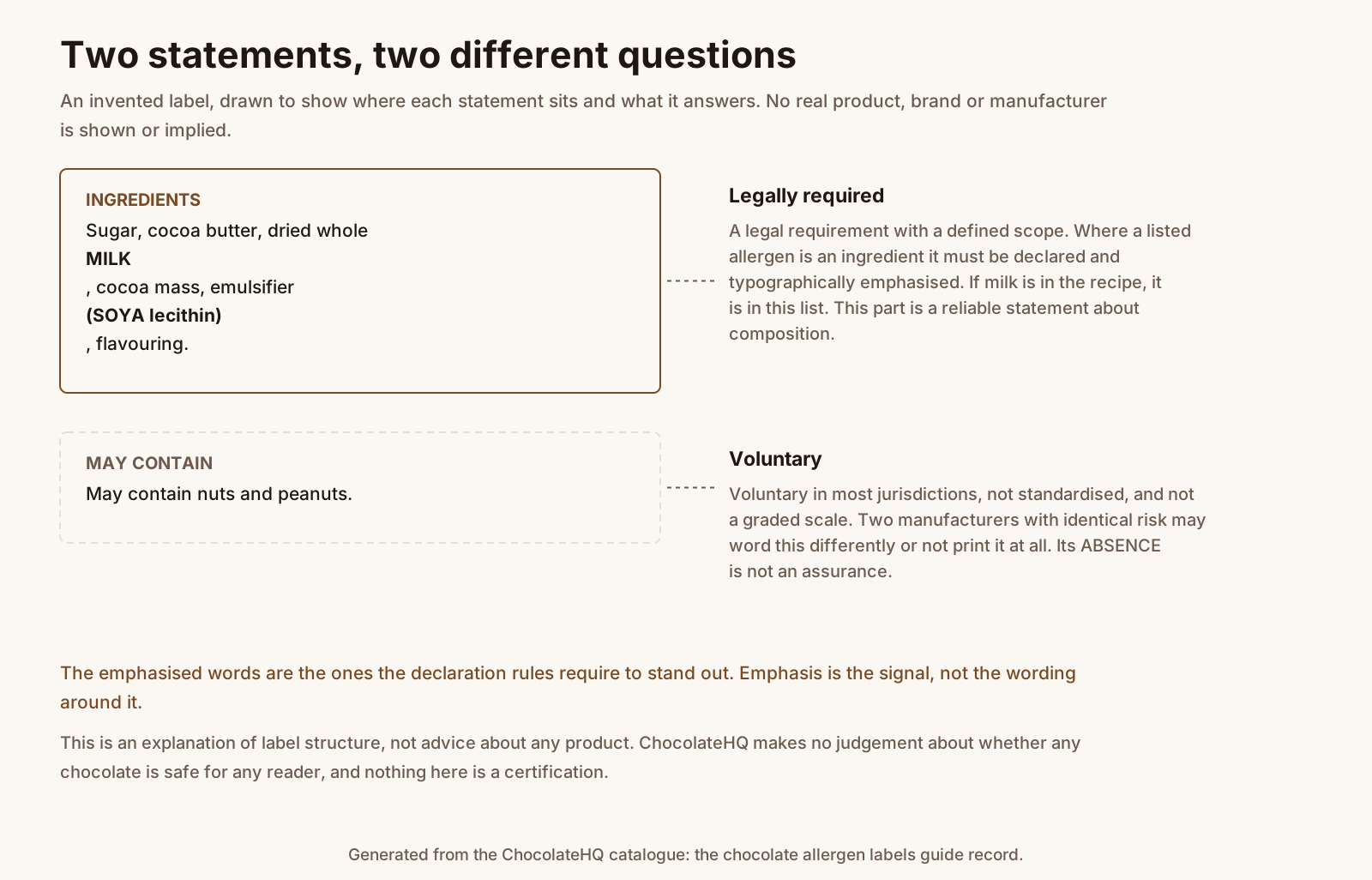
Two different statements appear on every chocolate package, they answer different questions, and only one of them is legally required.
If you read nothing else
The ingredient list is a legal declaration about the recipe. 'May contain' is a voluntary, unstandardised statement about the equipment — and its absence proves nothing.
The ingredient declaration
In the EU and UK, a defined list of allergens must be declared and emphasised — typographically distinguished — wherever they are used as ingredients. Milk, nuts, peanuts, soya, cereals containing gluten and sesame all appear regularly in chocolate products.
This part is a legal requirement with a defined scope. If milk is in the recipe, it is in the list, and it is emphasised. That is a reliable statement about composition.
The precautionary statement
'May contain', 'made in a factory that also handles', 'not suitable for' — these are voluntary in most jurisdictions, are not standardised, and are not a graded scale. Two manufacturers with identical risk may label differently.
Crucially, the absence of a precautionary statement is not an assurance. It may mean a rigorous assessment found no material risk, or it may mean nobody wrote one. You cannot tell which from the package.
What this means in practice
For a preference or an intolerance, the ingredient list is generally what you need and it is reliable.
For a diagnosed allergy, the ingredient list answers only half the question, the precautionary statement is unstandardised, and the meaningful assurances come from dedicated facilities and manufacturer allergen policies. Loose chocolates from an open counter carry a risk that no packaging statement addresses.
What any of this means for an individual is a clinical question. This guide describes what the statements assert.
Covered in this guide
- Reading an ingredients listThe rest of what a chocolate ingredient list tells you.
- Chocolate and allergyThe evidence on chocolate allergy as distinct from label reading.
- Nut-free chocolateThe case where the precautionary statement matters most.
Sources
- ChocolateHQ editorial synthesis — ChocolateHQ(citation identity confirmed; passage not re-read)
- Regulation (EU) No 1169/2011 of the European Parliament and of the Council on the provision of food information to consumers — European Parliament and Council of the European Union, 2011(citation identity confirmed; passage not re-read)