The cocoa supply chain
Seven or eight parties stand between a cocoa tree and a chocolate bar, and the two that set the price are neither the farmer nor the brand.
If you read nothing else
Aggregation at three separate points is why cocoa is hard to trace, and grinding is where bean identity is lost. Keeping a lot separate costs money at every step, which is what a traceability claim is paying for.
The chain
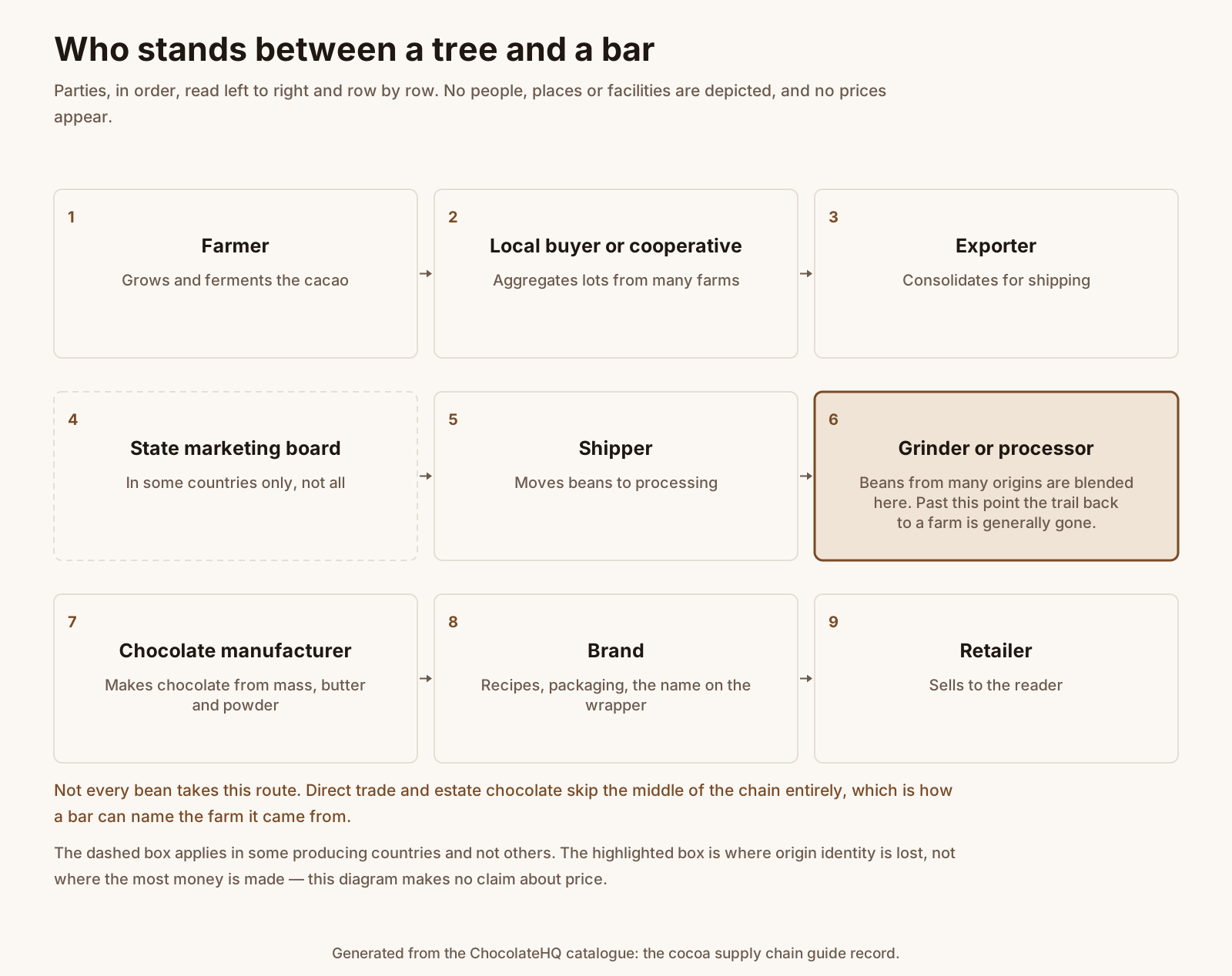
Farmer, then a local buyer or a cooperative, then an exporter, then in some countries a state marketing board, then a shipper, then a grinder or processor, then a chocolate manufacturer, then a brand, then a retailer.
The grinder is the party most people have never heard of and the one that matters most. Grinding — turning beans into mass, butter and powder — is concentrated among a small number of very large companies, and it is the point at which beans from many origins are blended and lose their individual identity. Once cocoa has been ground, the trail back to a farm is generally gone.
Where the price is set
Cocoa is priced on the London and New York futures exchanges. Large manufacturers hedge and buy forward, which means a price movement reaches their products slowly and partially. Farmers are least protected, because the farmgate price is set below the exchange price and does not track it closely upward.
Grinding figures — the volume of beans processed — are watched as the demand indicator, and the ratio between cocoa butter and cocoa powder prices determines whether processing beans is profitable at all. When butter is expensive relative to powder, manufacturers substitute where the law allows, which is the mechanism by which an exchange movement reaches a wrapper.
Why traceability is difficult
Aggregation is the answer. Beans from thousands of smallholdings are pooled at buying stations, blended again at export, and blended a third time at grinding. Each step is economically rational and each destroys information.
Single-origin, single-estate and micro-lot products are the exceptions, and they are exceptions because keeping a lot separate through that chain costs money at every step. That is what a traceability claim is actually buying, and it is why the specific claims — named farm, harvest year, lot separation — are the ones worth anything.
Covered in this guide
- MalaysiaA country that grows very little cacao and grinds a great deal of it — the clearest illustration that processing capacity and growing capacity are different industries in different places.
- Storage and transportThe steps between the farm and the grinder, where beans are pooled and where lot identity is first lost.
- Chocolate price driversWhat moves the price, and why supply cannot answer it.
Sources
- ChocolateHQ editorial synthesis — ChocolateHQ(citation identity confirmed; passage not re-read)
- Quarterly Bulletin of Cocoa Statistics — International Cocoa Organization (ICCO)(citation identity confirmed; passage not re-read)