Tasting scorecard
A structured record of a tasting — appearance, snap, aroma, flavour development, texture and faults.
Groups the axes by the point in the tasting where each is actually assessed.
Your note
A balanced profile with no dimension standing out.
CHOCOLATE TASTING NOTE

Untitled tasting
Tasted: 2026-08-27

Aroma intensity      not recorded
Sweetness            not recorded
Bitterness           not recorded
Acidity              not recorded
Fruit character      not recorded
Smoothness           not recorded
Finish length        not recorded

A balanced profile with no dimension standing out.

Recorded with ChocolateHQ. No overall score is produced by design.
Nothing here is saved or sent anywhere. Copy or print the text if you want to keep it.
Blank sheet for a four-bar flight
Copy or print this to fill in by hand. Discrimination falls off sharply past four or five bars, which is why the sheet stops there.
CHOCOLATE TASTING SHEET

Room temperature, around 20°C. Mild to intense. Water and plain bread between.
No overall score — record a profile, not a verdict.

── Bar 1 ───────────────────────────────────────
Name / maker / origin / %:

Aroma intensity      Faint 1 · 2 · 3 · 4 · 5 Pronounced
Sweetness            None 1 · 2 · 3 · 4 · 5 Very sweet
Bitterness           None 1 · 2 · 3 · 4 · 5 Strong
Acidity              Flat 1 · 2 · 3 · 4 · 5 Sharp
Fruit character      None 1 · 2 · 3 · 4 · 5 Dominant
Smoothness           Grainy 1 · 2 · 3 · 4 · 5 Silky
Finish length        Short 1 · 2 · 3 · 4 · 5 Long

Faults noticed:
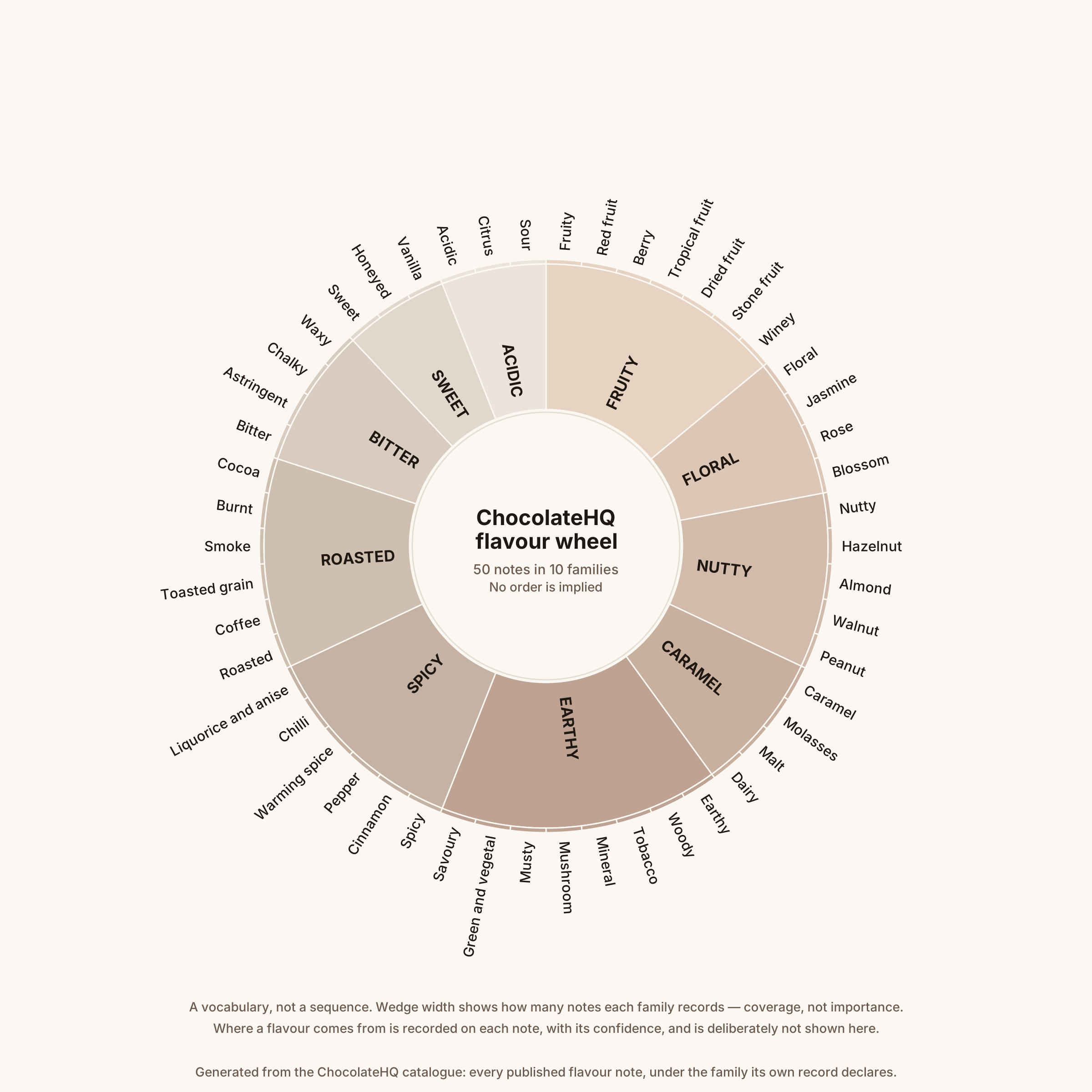
Descriptors:
Notes:

── Bar 2 ───────────────────────────────────────
Name / maker / origin / %:

Aroma intensity      Faint 1 · 2 · 3 · 4 · 5 Pronounced
Sweetness            None 1 · 2 · 3 · 4 · 5 Very sweet
Bitterness           None 1 · 2 · 3 · 4 · 5 Strong
Acidity              Flat 1 · 2 · 3 · 4 · 5 Sharp
Fruit character      None 1 · 2 · 3 · 4 · 5 Dominant
Smoothness           Grainy 1 · 2 · 3 · 4 · 5 Silky
Finish length        Short 1 · 2 · 3 · 4 · 5 Long

Faults noticed:
Descriptors:
Notes:

── Bar 3 ───────────────────────────────────────
Name / maker / origin / %:

Aroma intensity      Faint 1 · 2 · 3 · 4 · 5 Pronounced
Sweetness            None 1 · 2 · 3 · 4 · 5 Very sweet
Bitterness           None 1 · 2 · 3 · 4 · 5 Strong
Acidity              Flat 1 · 2 · 3 · 4 · 5 Sharp
Fruit character      None 1 · 2 · 3 · 4 · 5 Dominant
Smoothness           Grainy 1 · 2 · 3 · 4 · 5 Silky
Finish length        Short 1 · 2 · 3 · 4 · 5 Long

Faults noticed:
Descriptors:
Notes:

── Bar 4 ───────────────────────────────────────
Name / maker / origin / %:

Aroma intensity      Faint 1 · 2 · 3 · 4 · 5 Pronounced
Sweetness            None 1 · 2 · 3 · 4 · 5 Very sweet
Bitterness           None 1 · 2 · 3 · 4 · 5 Strong
Acidity              Flat 1 · 2 · 3 · 4 · 5 Sharp
Fruit character      None 1 · 2 · 3 · 4 · 5 Dominant
Smoothness           Grainy 1 · 2 · 3 · 4 · 5 Silky
Finish length        Short 1 · 2 · 3 · 4 · 5 Long

Faults noticed:
Descriptors:
Notes:
What this cannot tell you
- A scorecard records perception, and perception varies with temperature, time of day, what was eaten beforehand and what was tasted immediately before.
- No overall score is produced and none will be. A single number collapses seven independent dimensions and invites comparison between bars that are not comparable.
- The intensity axes are not quality judgements. A high bitterness score is an observation, not a criticism.
- Nothing is saved. The note exists while the page is open and is exported as text — there is no account, no storage and no server call.
Why there is no overall score
A single number collapses seven independent dimensions and invites comparison between bars that are not comparable — a 100% bar and a milk chocolate would be ranked on a scale one of them is guaranteed to lose. The scorecard records a profile, not a verdict. For the method itself, see how to taste chocolate.