Christmas chocolate traditions
The largest chocolate season of the year, and the one with the widest spread of formats — advent calendars, hollow figures, coins, selection boxes and tree decorations all belong to it.
This is a current practice
A current annual custom with a large seasonal production cycle behind it. Formats and expectations change — the premium advent calendar is a recent development — and the record describes present practice.
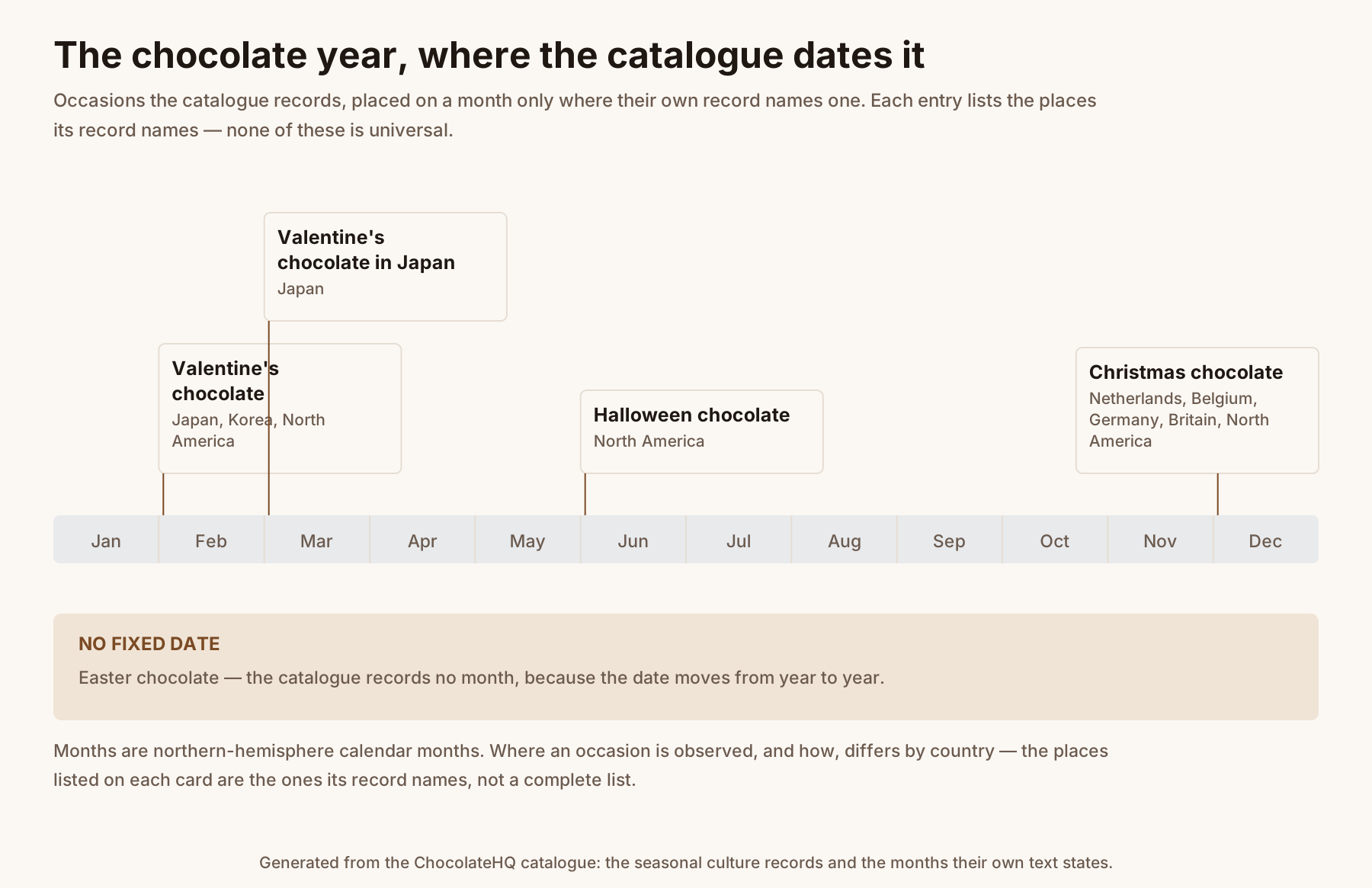
Christmas is the biggest chocolate season in most markets that observe it, and unlike Easter it is not dominated by a single format. Several distinct products belong to it, each with its own history.
The advent calendar predates its chocolate form. Counting the days to Christmas with a printed calendar is a nineteenth-century German Protestant practice; filling the windows with chocolate is a twentieth-century commercial addition, and it is now the dominant version.
Saint Nicholas figures in moulded chocolate belong to a Northern European tradition centred on 6 December rather than on Christmas Day, and are a substantially larger category in the Netherlands, Belgium and Germany than in Britain or North America. Chocolate coins descend from the same tradition of small gifts on that day.
The selection box and the tin of assorted chocolates are British and Irish staples with a specific social function: a shared item placed out for a household rather than given to a person. That makes it a genuinely different product from the gift assortment, despite looking similar.
- Period
- Nineteenth century to the present
- Region
- Europe and North America, and markets they exported to
- Kind of record
- Living practice
Significance
The largest annual concentration of chocolate production and sale, and the season that supports the widest range of formats.
Seasonal share figures are published by trade bodies in forms that differ between markets and years, and ChocolateHQ prints none. The ranking against other seasons is an editorial reading.
Related
History and culture
- Advent calendar chocolateWhat is actually in an advent calendar, and why the chocolate is usually thin.
- Hollow chocolate figureThe moulded figure format, which Christmas shares with Easter.
- Chocolate selection boxThe selection box and the tin, and how they differ from a gift assortment.
- Seasonal chocolateThe production category and its formulation constraints.
Covered in
- Christmas chocolateWhere each of the formats came from, including the advent calendar.
History and culture
- German and Austrian chocolate traditionsThe seasonal record that already refers to the advent calendar without a home to point at.
Sources
- ChocolateHQ editorial synthesis — ChocolateHQ(citation identity confirmed; passage not re-read)