Winnowing
Cracking the beans and separating the shell from the nib by air. Mechanical, not chemical.
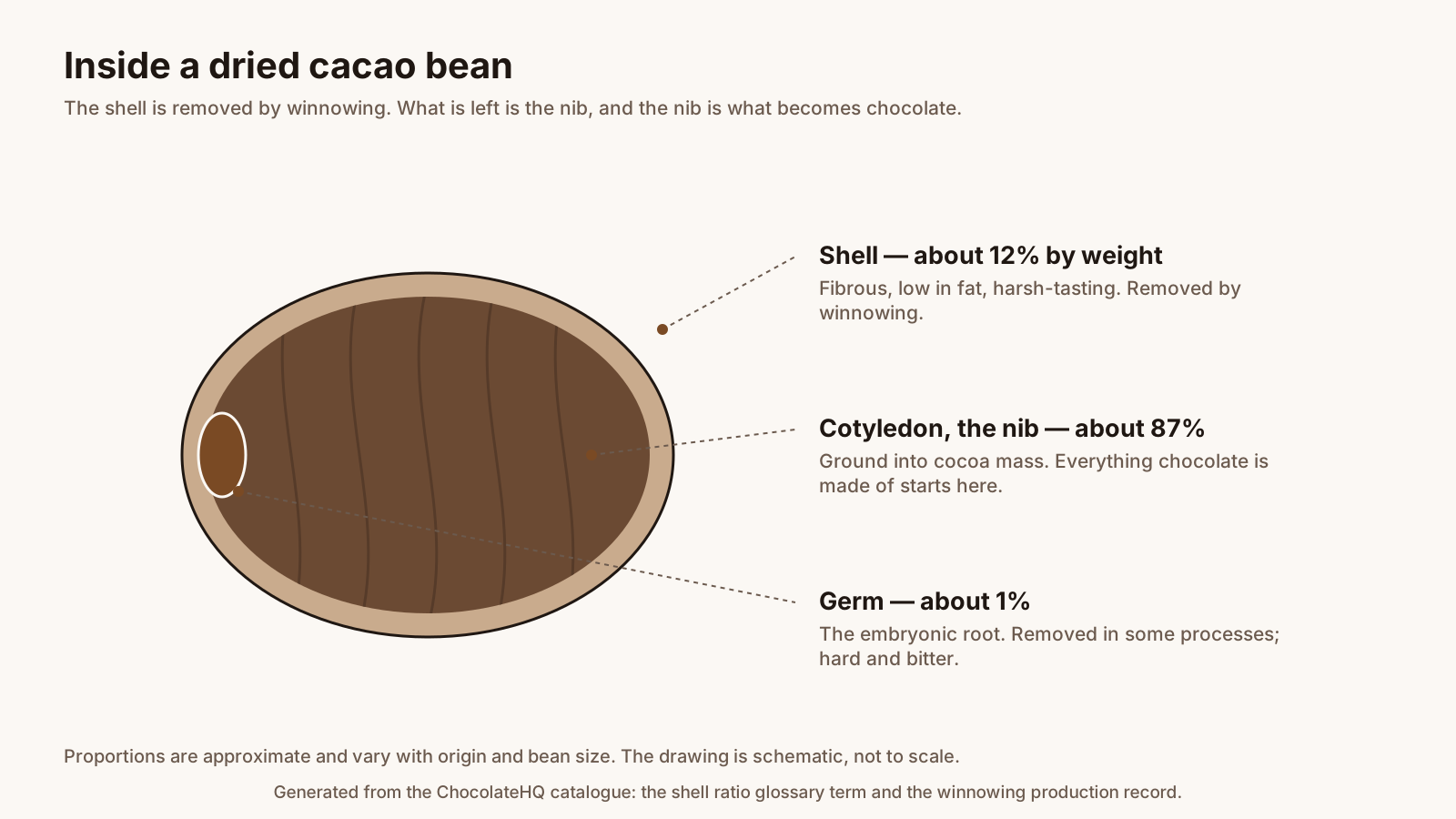
The roasted bean is cracked and the fragments passed through moving air. The shell is light and blows away; the denser nib falls. What remains is nib — the part that becomes chocolate — at around fifty per cent cocoa butter by weight.
Nothing about flavour happens here, but shell left in the nib is gritty, dilutes the chocolate and carries a fibrous off-taste, so the efficiency of the separation is a real quality variable and is one of the hardest things for a small maker to do well.
What it does
Cracks the bean and separates the lighter shell from the denser nib using airflow.
Why it matters
Residual shell is gritty and tastes woody, and it does not grind out. Small-scale winnowing is inefficient, which is one of the practical limits on very small production.
- Optional?
- Not optional for solid chocolate. Cocoa shell is separately used for tea-like infusions.
When it goes wrong
Shell carried through into the nib, producing a slightly gritty, papery character in the finished bar.
Related
Defines
- Cacao nibsNibs are simply what is left after winnowing removes the shell — the raw material of every chocolate there is.
- Cocoa shellThe other half of the winnowing output, long treated as waste and increasingly brewed as an infusion.
Flavour developed here
- WoodyThis stage is where the note is created, amplified or destroyed. Cedar, oak and dry timber. At low levels a characteristic; at higher levels it usually means shell left in the nib.
Commonly confused with
- CrackingDescribed as one step and performed as two. Cracking sizes the fragments; winnowing separates them by airflow, and it can only work on what cracking gave it.
Covered in
- Winnowing explainedThe stage record itself.
- Bean-to-bar equipmentThe stage that is tedious to improvise and possible to.
Health topics covering this
- Chocolate and horsesWinnowing is where the husk is separated, and the volume of husk it produces is why the material ends up in feed and horticulture at all.
Sources
- ChocolateHQ editorial synthesis — ChocolateHQ(citation identity confirmed; passage not re-read)
- The Science of Chocolate — Royal Society of Chemistry(citation identity confirmed; passage not re-read)