Making filled chocolates
Shell, fill, cap. Three tempered-chocolate operations in sequence, and the filling has to be at the right temperature for all of them.
Making a filled bonbon means casting a shell, filling it and capping it — with the chocolate in temper for the first and third steps, and the filling cool enough not to melt the shell in between.
That sequencing is what makes it demanding. A ganache filled while warm melts the shell from the inside; a ganache filled while cold does not settle and leaves an air gap under the cap. Around 30°C is the working window for the filling, which is roughly the same as the chocolate's.
- What it is for
- To produce moulded filled chocolates with an even shell and a clean cap.
- Working temperature
- 29–32°C — Both the chocolate and the filling need to be near 30°C. A large temperature difference between them is the main cause of leaks and separation.
- Works with
- Bonbon, Couverture, Dark couverture
Method
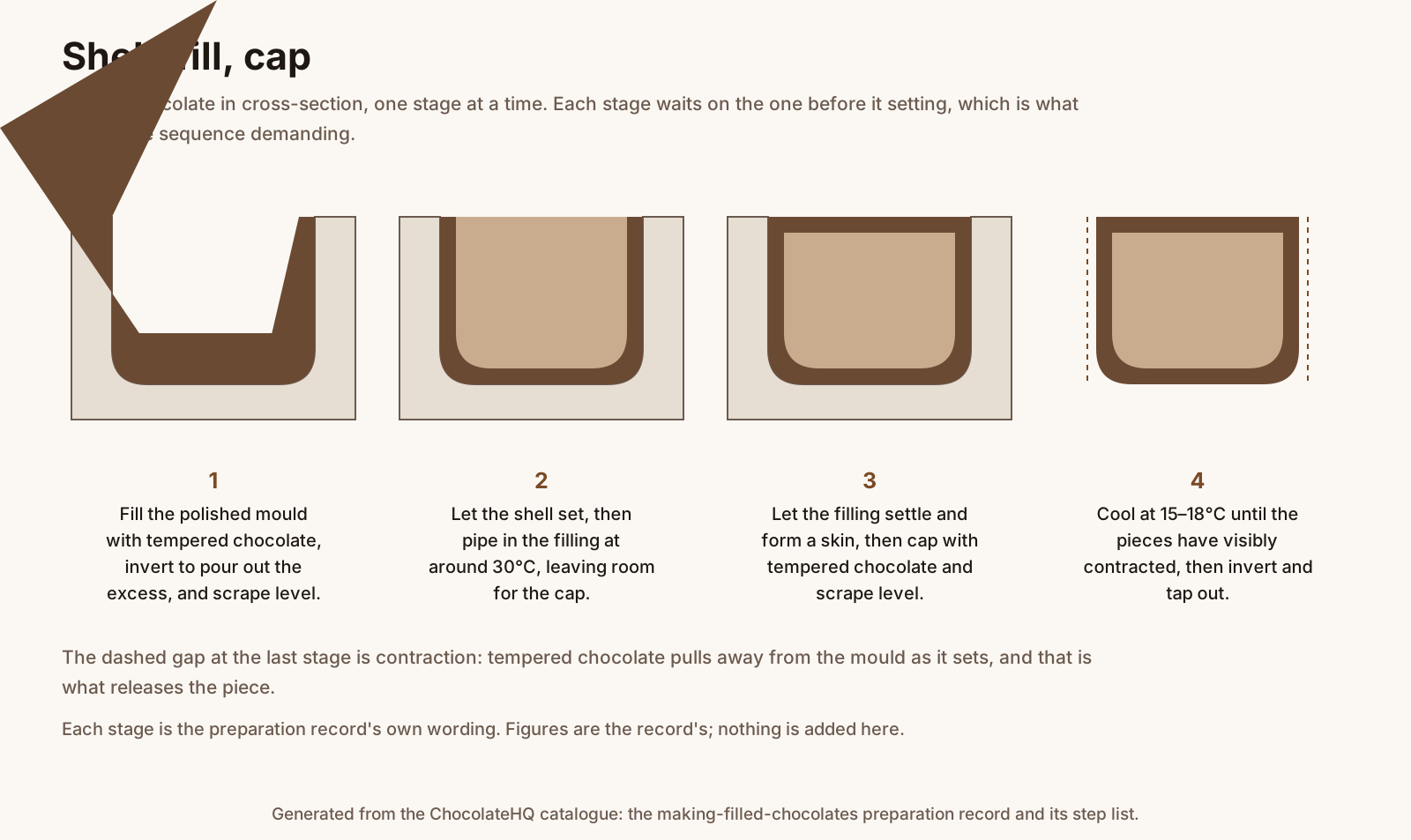
1. Fill the polished mould with tempered chocolate, invert to pour out the excess, and scrape level.
Where people go wrong: Leaving it too long before inverting, which gives a thick heavy shell.
2. Let the shell set, then pipe in the filling at around 30°C, leaving room for the cap.
Where people go wrong: Filling with warm ganache, which melts the shell from inside and leaks through.
3. Let the filling settle and form a skin, then cap with tempered chocolate and scrape level.
4. Cool at 15–18°C until the pieces have visibly contracted, then invert and tap out.
When it goes wrong
| Symptom | Cause | Fix |
|---|---|---|
| Filling leaks out of the base | The shell had a gap, or the filling was warm enough to melt through it. | Check the shell is complete before filling, and cool the filling to around 30°C. |
| Air gap between filling and cap | The filling was too cold to settle level before capping. | Fill at around 30°C and tap the mould to settle before capping. |
| Pieces will not release | Out of temper. | Remelt and re-temper. Forcing them will break the shells. |
Related
Works with
- BonbonShell, fill, cap. Three tempered-chocolate operations in sequence, and the filling has to be at the right temperature for all of them.
- CouvertureShell, fill, cap. Three tempered-chocolate operations in sequence, and the filling has to be at the right temperature for all of them.
- Dark couvertureShell, fill, cap. Three tempered-chocolate operations in sequence, and the filling has to be at the right temperature for all of them.
- Artisan chocolateFilled moulded work is the defining output of the chocolatier tradition, which is what artisan usually denotes.
- Sugar-free couvertureSugar-free shells behave close enough to conventional couverture to mould, with a softer set and a manufacturer-specific tempering curve.
Covered in
- Why chocolate will not releaseThe filled-chocolate context where release matters most.
- Dubai chocolate explainedHow to mould a filled bar, and where a home version fails.
History and culture
- The Belgian pralineHow the shell is made by hand, and where it goes wrong.
- Dubai chocolateHow a filled bar of this kind is made, and why a home version is harder than it looks.
Sources
- ChocolateHQ editorial synthesis — ChocolateHQ(citation identity confirmed; passage not re-read)
- The Science of Chocolate — Royal Society of Chemistry(citation identity confirmed; passage not re-read)