Pressing
Squeezing cocoa butter out of chocolate liquor, leaving a solid cake that becomes cocoa powder. The step that created the entire cocoa and confectionery industry.
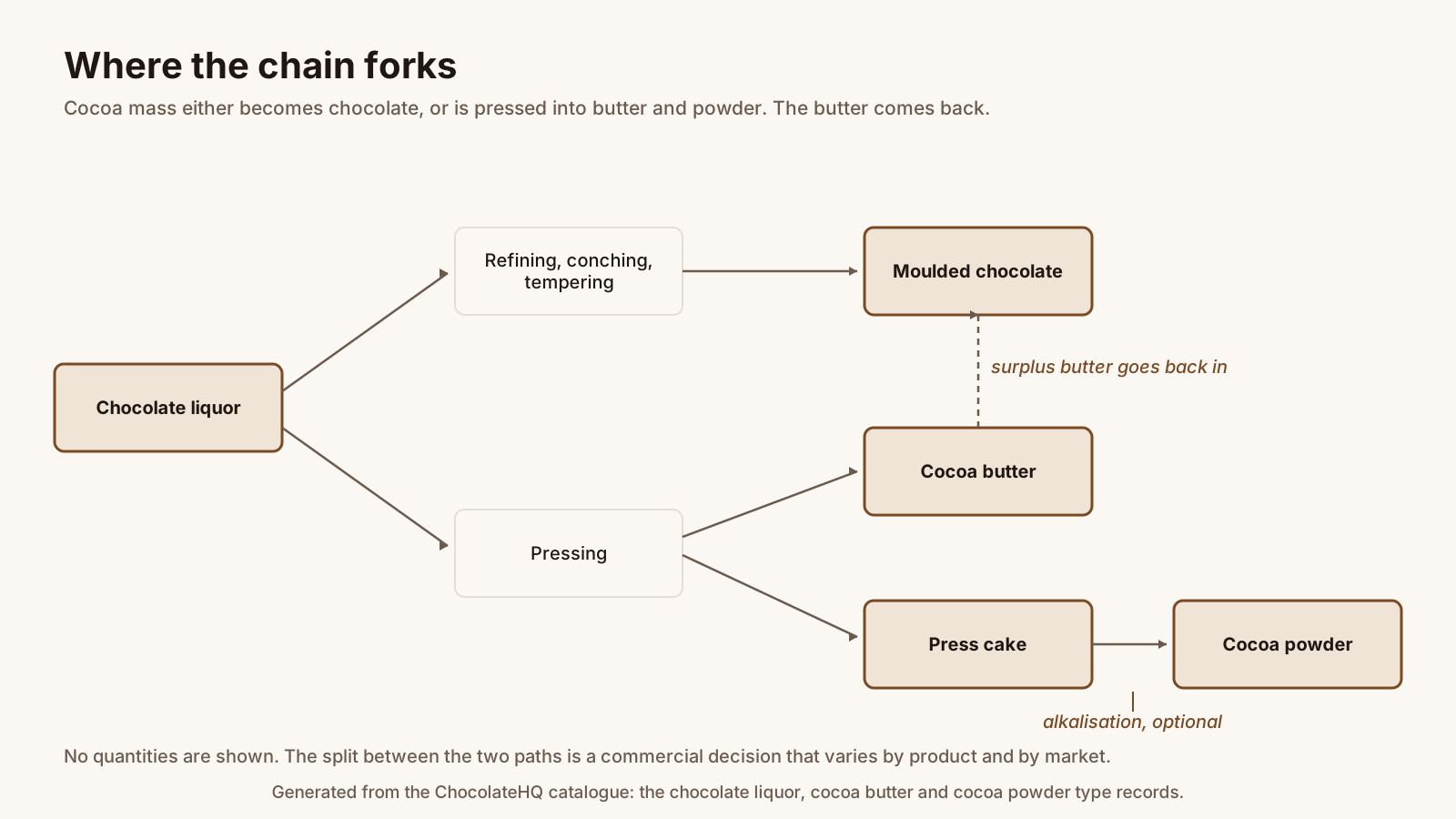
A hydraulic press forces cocoa butter out of warm chocolate liquor, leaving a hard cake of compressed cocoa solids. The cake is broken and milled into cocoa powder; the butter goes into white chocolate, couverture and cosmetics.
This is the branch of the chain that does not lead to a bar, and it is historically the more important one. The cocoa press, developed in the Netherlands in the 1820s, is what made cocoa powder available as a cheap drink and — crucially — produced surplus cocoa butter that could be added back into a mixture to make something castable. The moulded eating bar exists because pressing exists.
How hard the liquor is pressed determines the residual fat in the cake, which is why cocoa powder comes in fat grades. Low-fat cocoa is cheaper and drier in use; high-fat cocoa makes a better drink and a richer bake.
What it does
Separates cocoa butter from the non-fat cocoa solids in chocolate liquor under hydraulic pressure, producing butter and a press cake.
Why it matters
It produces both cocoa powder and the surplus cocoa butter that eating chocolate depends on. Without it there is no bar and no cocoa drink.
- Typical temperature
- 90–105°C
- Why the range is wide
- Press pressure and duration set the residual fat in the cake, typically leaving somewhere between about 10 and 24 per cent. That range is what distinguishes cocoa powder grades.
When it goes wrong
Over-pressing produces a very low-fat cake that gives a thin, dusty drink and a dry bake. It is a cost decision rather than an error, and it is invisible on most consumer packaging.
Why this step made the modern industry
Before the press, chocolate was a drink made from ground beans with all their fat still in it, which floated as a greasy layer. Pressing removed the fat, made a palatable powder, and left the manufacturer holding a surplus of cocoa butter with no obvious use. Adding it back to sweetened cocoa mass produced something that could be cast into a mould and eaten, which is the entire eating-chocolate industry in one sentence.
Related
Defines
- Cocoa powderCocoa powder is the pressed cake milled, and the press's residual fat setting is what determines the powder's grade.
- Cocoa butterThe surplus cocoa butter that pressing produced is what made the moulded eating bar possible in the first place.
- Fat-reduced cocoaPress duration and pressure set the residual fat directly. A 10–12% powder and a 20–24% powder differ only in how hard they were pressed.
Required by
- White chocolateWhite chocolate is built from cocoa butter, which only exists in quantity because pressing separates it from the solids.
Covered in
- How chocolate is madeThe fork in the chain, and where cocoa powder comes from.
- What cocoa butter doesWhere cocoa butter is separated from the mass.
- What is cocoaThe stage that creates cocoa powder from cocoa mass.
- Cocoa butter beyond chocolateWhere cocoa butter is separated from the solids.
Compared in
- Pressing vs grindingSet against Grinding, with the practical consequence of each difference.
History and culture
- The invention of the industrial barThe Dutch cocoa press is the first of the four innovations, and the one the other three depend on.
- The cocoa pressThe process step this record is the history of.
Sustainability and economics covering this
- Where a chocolate bar's footprint sitsThe step that creates the co-products whose allocation drives much of the variation.
Sources
- ChocolateHQ editorial synthesis — ChocolateHQ(citation identity confirmed; passage not re-read)
- The Science of Chocolate — Royal Society of Chemistry(citation identity confirmed; passage not re-read)